Agentic AI is forcing a new truth on marketing teams. It is not enough for AI to generate outputs quickly. Agents are expected to decide, move, and act across systems. That only works when they have the right context at the right moment.
That is why "Context as a Service" is showing up in industry conversations, not as a buzzword, but as a signal that context is becoming a core input to autonomy.
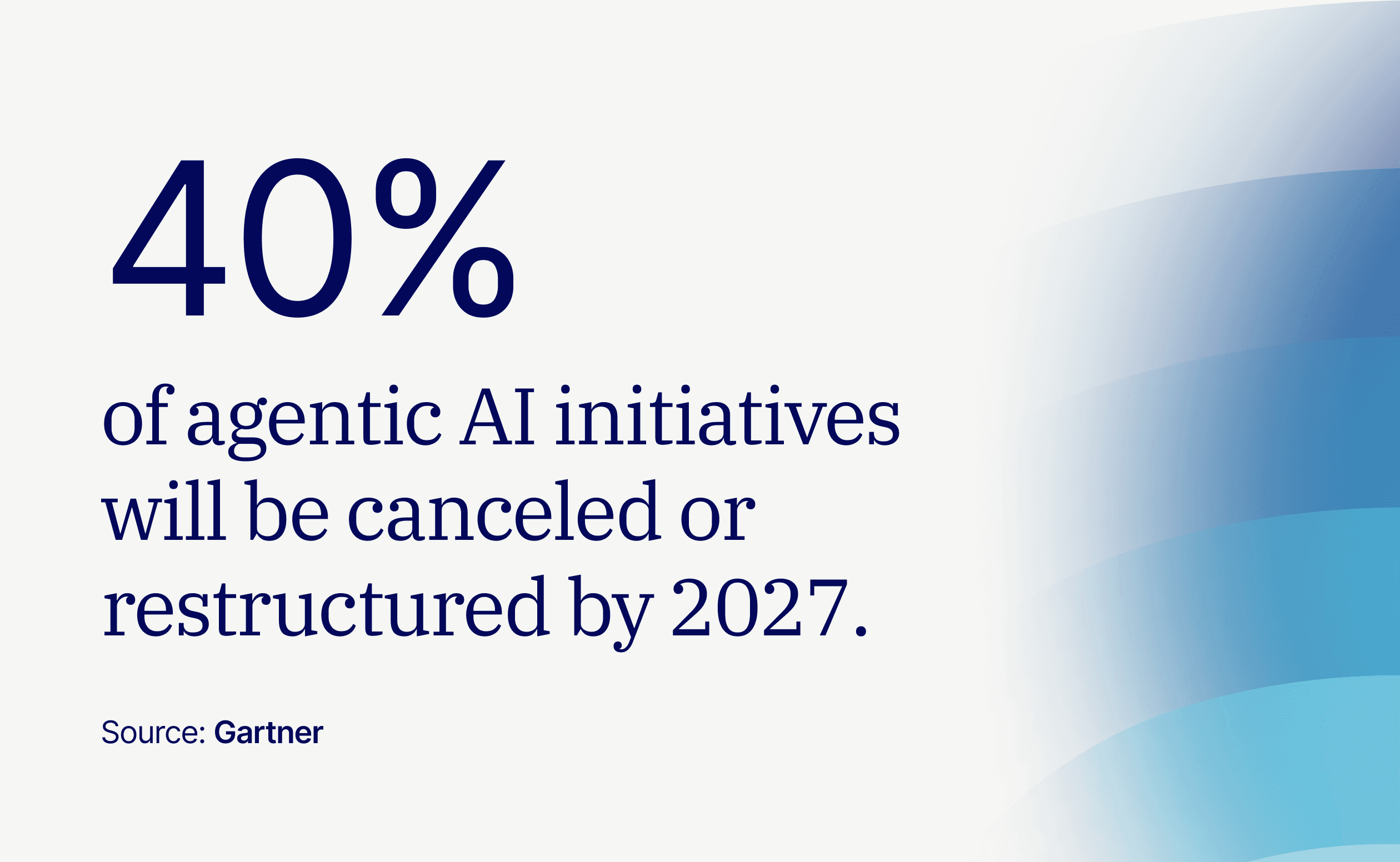
The problem? Many agentic AI initiatives will not fail because the models are weak. They will stall because organizations deploy agents into environments that cannot supply reliable, current, decision-grade context. Gartner research indicates that over 40% of agentic AI initiatives will be canceled or significantly restructured by 2027 for exactly this reason.
AI is everywhere. Context infrastructure is not.
From Copilots to Agents: Why Context Changes Everything
AI copilots are reactive. They wait for prompts and execute tasks. AI agents operate with intent. They move across systems and take action autonomously.
That shift requires a new operating model. A copilot can generate content on demand. An agent should understand your brand positioning, competitive landscape, customer sentiment, and category dynamics before it acts. Without that awareness, automation scales noise.
Most organizations do not lack AI tools. They lack shared context. Context is what turns intelligence into direction.
The Architecture Problem
Many organizations are layering agents on top of data graveyards. Brand perception sits in dashboards disconnected from revenue conversations. Competitive signals live in static reports reviewed long after the market has moved.
Then leadership asks why AI is not driving material impact.
The stakes are tangible. In February 2026, Gartner's CMO Leadership survey revealed that 68% of CMOs are now accountable for revenue outcomes, yet 73% report their credibility with the C-suite has declined despite increased responsibility. Marketing is being measured on business outcomes but is still operating on fragmented data.
When context is fragmented, agents either do nothing useful or they do the wrong thing faster. As RSA Security noted:
"The primary risk in agentic AI is not model hallucination. It is context misalignment—when autonomous systems act on incomplete, outdated, or ungoverned context."
This is why agentic AI feels exciting in pilots and disappointing at scale.
What Works: Context as Infrastructure
The winners in this next phase will not be the companies with the most AI tools. They will be the ones who treat context as infrastructure.
That means:
Brand and category truth is continuously refreshed, not manually compiled
Competitive moves are interpreted, not just detected
Customer sentiment is connected to messaging and performance outcomes in real time
Strategic priorities shape recommendations, so teams see signal instead of noise
When context is operationalized, agents move with precision. Precision compounds.
What This Means for CMOs
Before you invest further in agentic AI, pressure-test your operating model:
Can your systems explain why a recommendation aligns with your strategic priorities, or are they optimizing in isolation?
Is brand sentiment accessible to performance teams in real time, or does it live in a quarterly deck?
Are your agents trained on proprietary competitive and customer signals, or generalized data?
If those questions are difficult to answer, the issue is not model sophistication. It is context architecture.
This Is Why We Built Spark
At BlueOcean, context is not a feature. It is the foundation. Spark™ is our multi-agent intelligence engine, trained on proprietary data across more than 3,000 sources and tracking more than 150 brand signals across competitive intelligence, brand perception, customer sentiment, and market dynamics.
Most platforms alert you when a competitor moves. Spark™ tells you whether that move is resonating, how it is shifting sentiment, and where your opening is.
When Spark™ detects a competitor campaign launch, it analyzes early market reaction, identifies which messaging angles are landing, and recommends how to respond in a way that stays anchored in your brand voice and current competitive gaps.
When customer reviews spike around a feature, Spark™ connects that signal to campaign performance so teams can adjust messaging before the next launch cycle.
When a CMO asks, “How should we respond to this market shift?”, Spark™ filters noise based on strategic priorities and customer sentiment so you see what actually matters.
This is context, operationalized for marketing intelligence.
The Market Is Shifting
In the age of agentic AI, advantage will not belong to the companies with the largest models. It will belong to the companies that understand their market deeply and operationalize that understanding. Context is the advantage. Spark™ is how you build it. See Spark™ in Action